

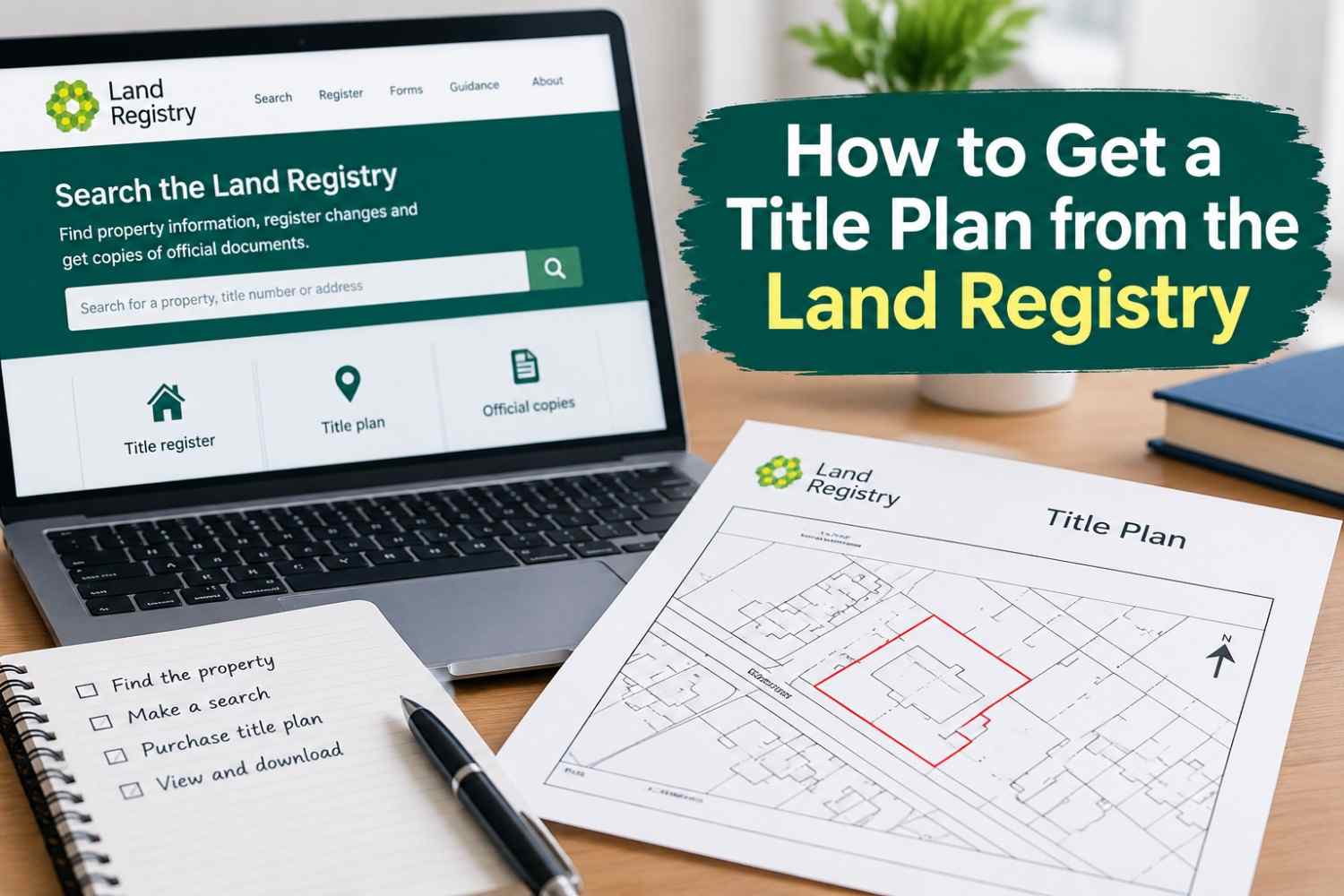
You can get a copy of a title plan from HM Land Registry’s online property information service if you want it for purchasing a property, a boundary check or a land registration application. But locating the document you need is only part of the process. You also need to know what the plan shows, how it differs from the title register and whether it offers sufficient details for the purpose for which you need it.
In this blog, you will discover how to find and download a title plan, what to do when your property does not appear in the search results and when you need a professionally prepared Land Registry-compliant plan.
What is a Title Plan?
A title plan is a map that identifies the property’s location and the general outline of a registered property in England and Wales. HM Land Registry uses Ordnance Survey mapping to prepare the plan, with red edging usually showing the area covered by the registered property.
You can use a title plan to identify the land included in a registered property and get an idea of where the property boundaries lie. It can be beneficial when buying or selling a house, checking property documents or looking at which land is involved in a registered title.
However, the title plan does not identify the precise boundary line. The red edging shows the approximate boundary of the registered property, but these lines do not establish the exact legal boundary on the ground. For more deep information you can check our guide Land Registry Lease Plan vs Title Plan: Which One Do You Need?
How to Get a Title Plan from HM Land Registry
You can get a standard title plan online through the HM Land Registry official online Property Information Service. Here are the steps you can follow to find and download the required document.
Step 1: Search for Your Property
Go to the HM Land Registry Property Information Service website and find a property title plan by address or location. Enter the postcode or address details to help you find the correct property record.
Look at the available results carefully, especially when the property has a flat number, multiple titles or separate areas of land. A single building may have more than one title number, so choose the one that matches the property or land you are looking for.
Step 2: Select the Correct Title
When you find the property, check the available property information. You may have an opportunity to check the property summary for free before buying the title documents.
Review the address and title details to make sure you have chosen the right entry. If the property has a separate garage, garden or an extra piece of land, you may need to investigate whether it is included in the same title or registered separately.
Step 3: Purchase the Title Plan
Choose the option to get the title plan and follow the instructions to pay for and download the document. The Land Registry title plan costs £7. You can also buy the title register separately for £7.
The title plan and register both offer different details, so consider getting both if you want to know the property’s registered extent and the legal restrictions or claims registered against the property.
Step 4: Download and Save the Document
After completing the buying process, download the title plan and save the PDF for your records. Review the document’s title number and property details to verify that it belongs to the right property.
Keep the downloaded copy with the other property documents such as the title register, transfer deeds or lease. These records may offer extra detail if you want to examine a property boundary or prepare documentation for a property transfer.
However, keep in mind that an online copy cannot be used as proof of ownership. If you want formal evidence of the registered title, follow HM Land Registry’s procedure for requesting an official copy.
What is the difference between Title Plan and Title Register?
Although both terms can be used for the same registered property, a title plan and a title register provide different information.
A title plan offers a visual representation of the registered property. It shows the property’s location and its approximate boundaries, generally marked with a red line on an Ordnance Survey map.
In contrast, a title register is a written record containing important details about the property. It can include the title number, registered owner, tenure, details of a mortgage, rights of way and legal restrictions. Some entries may refer to separate documents that provide further details.
If you are purchasing a property, examining both documents can help you know what is registered. But online copies cannot be used as evidence of ownership in court. If you need formal evidence of the registered title, you must get official copies from HM Land Registry.
What If You Cannot Find Your Property on the Land Registry?
A property might not appear in the search results because its address is recorded separately, the search details are incorrect, or the land is not registered.
First of all, review the spelling, postcode, and full address. Search for different address formats or use the map search if accessible. If the property still does not appear, HM Land Registry suggests applying for an index map search to find out whether the land is registered and identify the correct title details.
Some properties may remain unregistered, especially when the ownership has remained unchanged, and no change has occurred that legally needs registration. If the land is unregistered, you cannot obtain a copy of the registered title plan.
When the required property information is unavailable, contact HM Land Registry for advice on which search or application to use. Avoid making assumptions that the absence of search results means there is no legal owner of the property.
What If Your Property Boundaries Are Unclear?
A title plan can help you find the land included in the registered title, but it might not answer every question about property boundaries. HM Land Registry uses Ordnance Survey mapping to create its title plans. However, the map’s scale limits how much detail it can show. That is why boundaries on a title plan might not correspond to the exact position on the ground.
For example, the red line may follow the mapped boundary, wall or hedge, without determining whether the legal boundary lies along one side or across the middle of the feature. The physical features of the properties may have changed since the title plan was prepared.
If the boundary is unclear, review the title register, any deeds recorded as filed and relevant legal documents provided by your solicitor. For properties owned on a leasehold basis, check the lease with the title plan and register, as the plan may show the outline of the building instead of individual flats.
If you want to find out the exact legal boundary or resolve a dispute with a neighbour, consider getting advice from a legal expert or chartered surveyor. Do not depend on measurements alone taken from the title plan to limit the exact property boundary.
When Do You Need a Professionally Prepared Title Plan?
A standard title plan is enough if you simply want to see the property included in the title. But it may not offer the particular information needed for a property transaction or land registration application.
You may require an expert-prepared plan when selling or transferring part of your land, preparing a lease plan, documenting a defined area of the property, or providing evidence for an application that needs a new plan. The type of drawing will depend on the transaction and the relevant HM Land Registry requirements.
A professionally prepared plan can show the land or area being assessed using accurate measurements, clear boundary information and a suitable drawing format. Where existing documents are not enough, a measured survey might be required to record the relevant physical details.
Krystal Architecture creates plans that meet HM Land Registry-compliant requirements for plans and lease plans. The practice describes the purpose of a measured survey, which might be needed when existing scaled drawings are available in formats such as DWG, JPEG, PDF or hard copies. The requirements depend on the property and the purpose of the plan.
It is crucial to differentiate between preparing a compliant plan and resolving a legal property boundary dispute. A new drawing does not definitively show the exact legal boundary or guarantee approval of a registration application.
What Information Should You Prepare Before Requesting a Title Plan?
Before getting in touch with an architectural practice, collect the property’s address, any available title plan and register, relevant deeds or lease documents, and existing scaled drawings. Explain what the plan needs to show and whether it is needed for a sale, transfer, lease or another registration purpose.
This information helps the practice understand the work involved and determine whether the existing documents are sufficient or a measured survey is required.
Get Help with Your Land Registry Title Plan
Downloading a Land Registry title plan is simple when the property is properly registered and the document matches your requirements, but unclear boundaries, unavailable property records and transactions when only part of a property is being sold or transferred may need more investigation or a newly prepared plan.
If you want a title plan or lease plan prepared for your property transaction, Krystal Architecture can discuss your needs and explain the drawings and details required. Contact the practice to ask for a quote and find out which type of plan suits your project.